


Optimise Deep Sleep: A Practical 2026 Guide
Table of Contents
- How Much Deep Sleep Do I Need Each Night?
- How to Improve Deep Sleep Naturally: The Basics That Move the Needle
- The Best Supplements for Deep Sleep (and What to Check Before Buying)
- A Simple Evening Routine for Deeper Sleep
- Common Mistakes That Keep You in Light Sleep
- How to Tell If Your Deep Sleep Is Actually Improving
- Conclusion
- Frequently Asked Questions
Last Updated: September 14, 2026
How Much Deep Sleep Do I Need Each Night?
Most healthy adults need between 1 and 2 hours of deep sleep per night, which works out at roughly 13 to 23 percent of total sleep time (How Much Deep Sleep Do You Need?). This guide from Octi Nutrition explains how to optimise deep sleep without overhauling your entire life.

Deep sleep is the slow-wave stage of non-REM sleep where the body repairs tissue, consolidates memory and clears metabolic waste from the brain. It dominates the first half of the night, which is why a late bedtime costs you more than an early wake-up.
If you wake at 6am feeling unrefreshed, the problem is rarely total sleep duration. It is usually depth.
What the Sleep Cycle Actually Looks Like
A full cycle runs about 90 minutes, and you pass through light sleep, deep sleep and REM in sequence. Deep sleep is front-loaded: the first two cycles deliver the largest share, and later cycles are mostly REM. That single fact explains most sleep complaints in busy professionals. Push bedtime back by two hours and you do not lose sleep evenly. You lose the deepest portion first.
Signs You Are Running Short on Deep Sleep
- Waking after seven or eight hours still feeling foggy
- Relying on caffeine before 10am to function
- Slow recovery from gym sessions or minor illness
- Irritability and short fuse in the early afternoon
How to Improve Deep Sleep Naturally: The Basics That Move the Needle
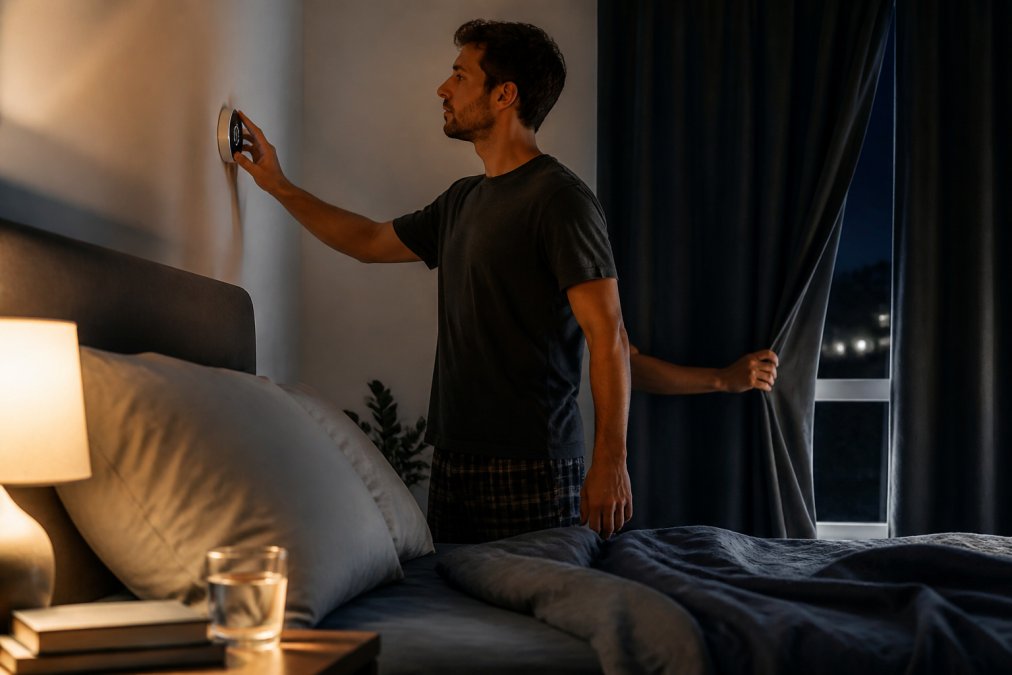
The fundamentals that improve deep sleep most reliably are cool room temperature, darkness, consistent timing and a wind-down period. None of them cost anything, and each one affects sleep architecture directly.
Temperature, Light and Timing
Core body temperature must drop for deep sleep to begin (The Temperature Dependence of Sleep). A bedroom around 16 to 18 degrees Celsius supports that drop; a warm room delays it. Light matters just as much, because the NHS guidance on insomnia and sleep hygiene notes that bright light in the evening suppresses melatonin, the hormone that signals sleep onset.
Keep these three aligned and you remove most of the friction:
- Same wake time every day, including weekends
- Bedroom cool, dark and quiet
- Dim lights for the final hour before bed
What to Cut Before Bed
Alcohol is the biggest offender. It shortens the time it takes to fall asleep, then fragments sleep in the second half of the night and suppresses deep sleep. A common mistake is treating a nightcap as a sleep aid when it is closer to a sleep tax.
Caffeine has a half-life of roughly five to six hours. An afternoon coffee at 3pm still leaves meaningful caffeine in your system at 9pm. Cut it off by early afternoon and see what changes within a week.
The Best Supplements for Deep Sleep (and What to Check Before Buying)
The best supplements for deep sleep are those that support the body's own wind-down pathway rather than sedating you. Magnesium and the serotonin precursors 5-HTP and L-tryptophan are the two categories with the most consistent rationale.

Before buying anything, check three things: the actual dose per serving, whether the label lists fillers, and whether the manufacturer publishes batch testing. A supplement with a clinical dose and no transparency is still a gamble.
Magnesium: The Most Common Gap
Magnesium is involved in more than 300 reactions in the body, including nerve signalling and muscle relaxation. Many people run low without realising it, and the symptoms, muscle tension, poor sleep and low mood, are easy to blame on stress.
Octi Nutrition's Double Magnesium provides 376mg per daily dose and is made in a facility certified to Good Manufacturing Practice, with a Certificate of Analysis available on request. That matters more than it sounds. Most magnesium on the shelf is magnesium oxide, which is cheap and poorly absorbed.
5-HTP and L-Tryptophan: Supporting the Wind-Down Pathway
Serotonin is the precursor to melatonin, and 5-HTP and L-tryptophan are the raw materials your body uses to make it. Octi Nutrition's 5-HTP with L-Tryptophan is formulated around that pathway, with a 90-day supply per pack.

If you take prescription medication, particularly for blood pressure or mood, speak to your GP before starting either. This is not a formality. Serotonin precursors interact with several common drug classes.
A Simple Evening Routine for Deeper Sleep
A workable routine is short and repeatable. The goal is a predictable signal that sleep is next, not a spa ritual you will abandon by Thursday.
- 9pm, screens off or dimmed, phone out of the bedroom
- 9.15pm, take your magnesium or 5-HTP with water
- 9.30pm, shower or bath; the post-bath temperature drop helps
- 9.45pm, read something physical, not a screen
- 10pm, lights out, same time every night
If you want the full routine in one purchase, the Octi Nutrition Sleep Stack at £27.00 combines the magnesium and 5-HTP approach in a single protocol.
Common Mistakes That Keep You in Light Sleep
The mistakes that keep people in light sleep are usually consistency problems, not knowledge problems. Knowing what to do is easy. Doing it on a Tuesday after a late meeting is the hard part.
- Weekend lie-ins. A two-hour shift on Saturday resets your body clock and undoes the week.
- Training hard after 8pm. Intense exercise raises core temperature and adrenaline for hours.
- A large late meal. Digestion competes with the temperature drop you need.
- Checking the clock at 3am. It triggers arousal and makes the next hour worse.
How to Tell If Your Deep Sleep Is Actually Improving
The honest answer is that most consumer wearables estimate deep sleep rather than measure it, so treat their figures as directional. What you can trust is how you feel in the first 60 minutes after waking.
Better markers to track:
- Time to full alertness after waking
- Afternoon energy without a second coffee
- Recovery speed after training or a late night
- Mood stability across the working day
Give any change at least two weeks. Sleep architecture shifts slowly, and judging a new routine after three nights tells you nothing useful.
Conclusion
Optimising deep sleep is not about finding one trick. It is about removing the things that fragment it, then giving your body the raw materials it needs to wind down properly.
At Octi Nutrition, every formula is built on that principle: evidence-led dosing, UK manufacturing in a GMP-certified facility, and independent laboratory testing on every batch. No fillers and no wellness theatre.
If you want to start with the fundamentals, build your sleep stack and give it a fortnight. The difference usually shows up in your mornings first.
Frequently Asked Questions
What is the recommended amount of deep sleep per night?
Most adults need roughly 13 to 23 percent of total sleep time in deep sleep, which works out at around one to two hours across a seven to nine hour night. Deep sleep comes in longer blocks early in the night, so a late bedtime cuts directly into it. If you regularly wake unrefreshed after eight hours, your deep sleep is likely being fragmented rather than shortened.
Can nutritional supplements help improve deep sleep quality?
Some can, provided the dose is meaningful. Magnesium contributes to normal muscle function and a settled nervous system, and a daily dose around 376mg covers a common dietary gap. 5-HTP with L-tryptophan supports serotonin production, the pathway your body uses to wind down. Supplements work best alongside the basics: a cool room, consistent timing and less screen exposure in the last hour.
How does temperature affect deep sleep cycles?
Your core temperature needs to drop slightly for deep sleep to begin. A bedroom around 16 to 18 degrees Celsius supports that drop. A warm room, a hot shower immediately before bed or heavy bedding can delay it, pushing deep sleep later into the night when there is less time for it. Cooling the room is one of the fastest changes you can make.
Does exercise timing impact deep sleep duration?
Regular exercise increases deep sleep, but the timing matters. Hard sessions finished within two hours of bed can raise core temperature and adrenaline, delaying sleep onset. Morning or early afternoon training tends to produce the biggest gains. If evenings are your only option, keep the intensity moderate and allow at least 90 minutes to cool down before getting into bed.