


Natural Alternatives to Prescription Probiotics
Table of Contents
- Why Professionals Turn Away from Prescription Probiotics
- Probiotic Foods for Gut Health: Real Options Beyond Supplements
- Prebiotic Foods for Gut Health: Feeding the Bacteria You Have
- Probiotic Supplements Versus Food: Which Approach Works
- How to Improve Gut Health Naturally: A Practical Framework
- Building Your Alternative: Combining Food, Prebiotics, and Targeted Supplementation
- Frequently Asked Questions
Last Updated: October 18, 2026
Why Professionals Turn Away from Prescription Probiotics
Prescription probiotics promise clinical precision. They're prescribed by doctors, backed by medical authority, and sound like they should work better than anything you can buy off the shelf. The issue isn't that prescription probiotics are ineffective, it's that they often miss the bigger picture of how gut health actually works.
Natural alternatives to prescription probiotics address what prescription-only formulations frequently overlook: the ecosystem. A single probiotic strain, however potent, arrives in a gut that may not be ready to support it.
Professionals with the most sustainable improvements often combine fermented foods, prebiotic fibres, targeted supplementation, and lifestyle consistency. That combination works because it mirrors how healthy guts actually function: diverse bacterial populations fed by diverse fibre sources, supported by adequate vitamins and minerals, and given time to stabilise.
The real question isn't whether prescription probiotics work. It's whether they're the only tool worth considering, and for most busy professionals, they're not.
Probiotic Foods for Gut Health: Real Options Beyond Supplements
Fermented Foods That Deliver Live Cultures
Fermented foods contain live bacterial cultures that can reach your gut intact, provided they haven't been heat-treated after fermentation. Sauerkraut, kimchi, miso, tempeh, kefir, and live yoghurt all deliver genuine microbial populations, not theoretical strains, but actual organisms you can taste and measure.
The advantage over prescription probiotics is variety. A fermented food typically contains dozens of bacterial and fungal species, whereas a prescription formulation may contain one or two. Your gut thrives on diversity.
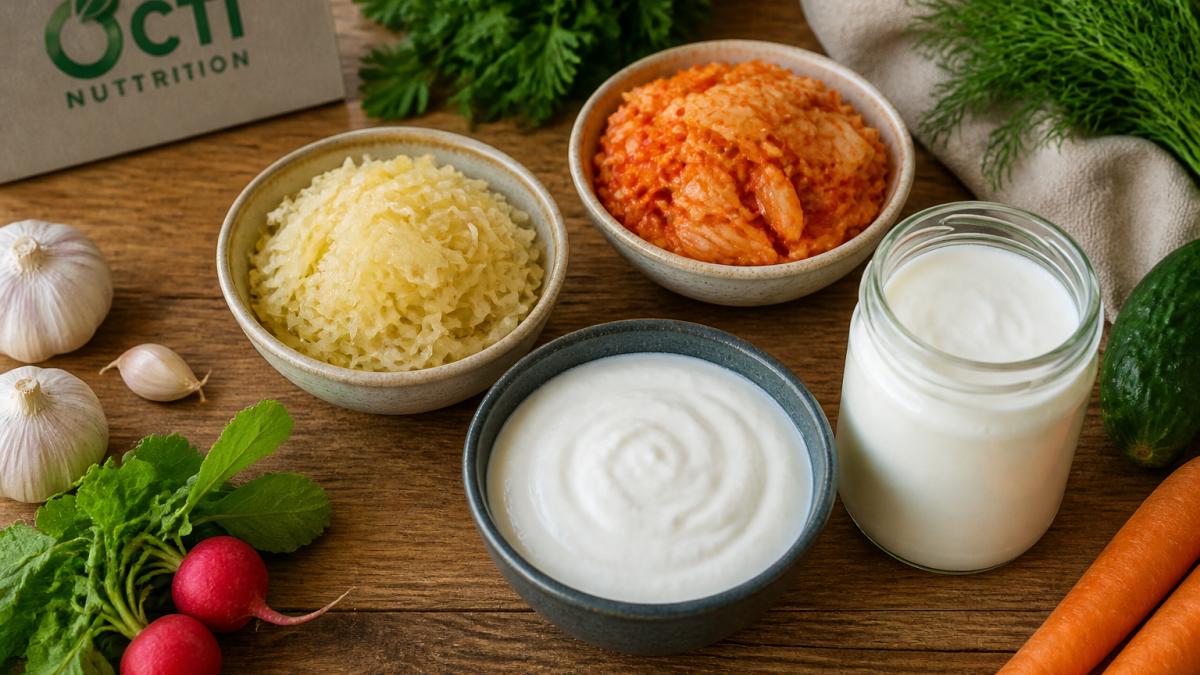
The catch is that fermented foods vary wildly in their bacterial content depending on production method, storage, and age. A jar of sauerkraut that's been sitting in a warm cupboard for six months contains a different microbial population than one kept refrigerated.
Consistency and Dose: Where Food Falls Short
Fermented foods deliver real probiotics, but they don't deliver consistent doses. A tablespoon of sauerkraut contains some bacterial cultures, how many is anyone's guess. You might get billions of CFU one day and millions the next, depending on storage conditions and how long the jar has been open. For professionals managing chronic gut issues or trying to rebuild a damaged microbiome, that inconsistency matters.
This is where prescription probiotics have a genuine advantage: they're standardised. You know exactly how many colony-forming units you're consuming. But standardisation alone doesn't guarantee results if the dose is too low, the strain selection doesn't match your needs, or you only take it sporadically.
Fermented foods are best viewed as a daily habit that contributes to gut health over time, not as a targeted therapeutic intervention. Eat them regularly, enjoy them, and let them work alongside other strategies. But if you're trying to address a specific gut complaint or rebuild your microbiome after antibiotics, relying on fermented foods alone often falls short.
Prebiotic Foods for Gut Health: Feeding the Bacteria You Have
Prebiotics are the food that beneficial bacteria eat. They're non-digestible fibres, usually inulin, FOS (fructo-oligosaccharides), or resistant starch, that pass through your small intestine intact and reach your colon, where they feed your existing bacterial populations.
Common prebiotic foods include onions, garlic, leeks, asparagus, bananas, oats, and legumes. Many professionals don't eat enough of these consistently, especially when working long hours and eating irregularly. A prebiotic-rich diet takes planning.
This is where natural alternatives to prescription probiotics gain real traction: combining targeted prebiotics with probiotics creates the conditions for success. Your gut bacteria have food. They can multiply. They can produce short-chain fatty acids that stabilise your intestinal lining and reduce inflammation.
According to research on gut microbiota and dietary fibre from the British Nutrition Foundation, diets rich in diverse fibre sources support the growth of beneficial bacteria and improve markers of digestive health. The key word is diversity: one type of fibre feeds one type of bacteria.
Probiotic Supplements Versus Food: Which Approach Works
When Food Alone Is Insufficient
Fermented foods and prebiotic vegetables are genuinely valuable. They're real food, they're nutrient-dense, and they support long-term gut health. But they have limits. If you're recovering from a course of antibiotics, dealing with severe dysbiosis, or managing chronic digestive complaints, food-based probiotics often can't deliver the bacterial load or species diversity you need quickly enough.
This is the honest assessment: natural alternatives to prescription probiotics that rely entirely on food work well for maintenance and prevention. They work poorly for active intervention. If your gut is significantly compromised, you need supplemental support.
Supplements bridge that gap. They deliver higher bacterial counts in a single dose than you'd reasonably consume from food. They allow you to target specific strains known to address particular issues. And they're consistent, you know exactly what you're getting each day.
What to Look for in a Probiotic Supplement
When choosing a supplement as a natural alternative to prescription probiotics, specificity matters. Generic "probiotic blends" often contain strains that don't survive stomach acid or that don't colonise your colon effectively. Look for:
- Multiple strains, not just one. Your gut benefits from diversity. A supplement with multiple different bacterial strains can contribute to a more resilient microbial community.
- Stated CFU count. If the label doesn't tell you how many colony-forming units per serving, the manufacturer is hiding something.
- Prebiotic fibre included. The bacteria need food. A supplement that combines probiotics with prebiotic fibre (like FOS) gives those cultures the best chance of establishing and thriving.
- Transparent ingredient lists. No proprietary blends. No mystery fillers. Every ingredient should be named and dosed on the label.
- Third-party testing. Independent verification that what's in the bottle matches what's on the label isn't optional, it's essential. If a supplement manufacturer won't publish test results, move on.
The Medicines and Healthcare products Regulatory Agency (MHRA) guidance on food supplements sets standards for supplement quality in the UK market. Reputable manufacturers comply with these standards and often exceed them. Octi Nutrition's Pre + Pro 15, for example, combines 15 strains of live cultures at 15 billion CFU per serving with FOS prebiotic fibre and a complete B-vitamin complex, no proprietary blends, every amount printed on the label. It's designed specifically for professionals whose eating patterns are irregular and whose digestion is under stress.

How to Improve Gut Health Naturally: A Practical Framework
The 30-Day Reset Approach
Gut health doesn't change in a week. It changes through consistent action over weeks and months. A practical framework for most professionals is the 30-day reset: a defined period where you deliberately support your gut with food, prebiotics, and targeted supplementation, then assess how you feel and decide what to continue.
Here's the structure:
Week 1: Add fermented foods to every meal. A small portion of sauerkraut with lunch, kefir with breakfast, miso in your soup. Your gut will likely feel more active, this is normal as your bacterial populations adjust.
Week 2: Introduce prebiotic foods deliberately. Add an extra serving of vegetables, shift to wholegrain carbohydrates, include legumes where you can. This feeds the bacteria you're introducing and the ones you already have.
Week 3: Add a targeted probiotic supplement. If you're using Pre + Pro 15, take it daily with food. The supplement delivers consistent bacterial support while your food choices provide ongoing fibre and prebiotic content.
Week 4: Maintain consistency and observe. By this point, many professionals may notice improved digestion, more stable energy, better sleep, and clearer thinking.
| Phase | Action | Duration | Expected Change |
|---|---|---|---|
| Week 1 | Add fermented foods daily | 7 days | Increased digestive activity |
| Week 2 | Introduce prebiotic vegetables | 7 days | Improved fibre intake, bacterial feeding |
| Week 3 | Start probiotic supplement | 7 days | Consistent bacterial support |
| Week 4 | Maintain all three | 7 days | Stabilised digestion, improved energy |
Common Mistakes That Undermine Results
Many professionals start a gut health protocol and abandon it after two weeks because they don't see dramatic results. Gut health improvements are real but subtle. You won't feel them like you feel caffeine. You'll notice you're less bloated, your energy is more stable, your mood is steadier.
The mistake is expecting transformation rather than gradual improvement. Give any gut protocol 30 days before deciding it's not working.
Another common error is inconsistency. You take a probiotic supplement for three days, skip it for two, take it again. Your gut bacteria need consistent support to establish themselves. Irregular supplementation is nearly useless.
A third mistake is trying to change everything at once. You overhaul your diet, start three new supplements, eliminate foods you think are "inflammatory," and stress yourself into a state of anxiety about every meal. This approach typically fails because it's unsustainable and because the stress itself damages your gut.
Building Your Alternative: Combining Food, Prebiotics, and Targeted Supplementation
Natural alternatives to prescription probiotics work best when they're layered. Food provides real-world bacteria and nutrients. Prebiotics feed those bacteria. Supplements deliver consistent bacterial support when food alone can't.
For busy professionals, this typically means:
Daily fermented food: A small portion of sauerkraut, kimchi, or kefir with one meal. Not because it's a complete solution, but because it's a habit that takes 30 seconds and contributes meaningfully over time.
Prebiotic fibre: Either from food (vegetables, legumes, wholegrains) or from a supplement like the FOS included in Pre + Pro 15. Most professionals under-consume fibre, especially when eating irregularly.
Targeted supplementation: A probiotic supplement taken daily, ideally with food, for at least 30 days.
The Gut Reset Stack from Octi Nutrition combines Pre + Pro 15 with a Black Walnut & Pumpkin Seed Intestinal Cleanse, two complementary approaches working simultaneously. One adds live cultures and the fibre they need.

This approach can address the challenges of an optimally functioning gut when eating sporadically, under chronic stress, and not giving your microbiome the consistent support it needs. Food, prebiotics, and supplements together can offer comprehensive support.
The challenge for busy professionals isn't finding natural alternatives to prescription probiotics, it's implementing them consistently.
Frequently Asked Questions
What are the best natural alternatives to prescription probiotics?
Natural alternatives include fermented foods like sauerkraut, kimchi, and yoghurt that contain live cultures, alongside prebiotic foods such as garlic, onions, and asparagus. Many professionals also find targeted probiotic supplements, particularly those with multiple strains and transparent dosing, more practical than food alone, especially when schedules are demanding. A combination approach often works best: food provides variety, prebiotics feed existing bacteria, and a quality supplement ensures consistent delivery of viable cultures.
Can probiotic foods alone replace a prescription probiotic?
Probiotic foods can support gut health, but they may not always deliver the consistent CFU count or strain diversity of a targeted supplement. Fermented foods vary widely in bacterial content depending on preparation and storage. For professionals managing severe digestive issues or irregular eating patterns, food alone may not be sufficient. A comprehensive approach often combines fermented foods with prebiotic fibre and a supplement formulated with measured doses, ensuring you know exactly what you're consuming rather than guessing.
What is the difference between probiotics and prebiotics for gut health?
Probiotics are live beneficial bacteria; prebiotics are plant fibres that feed those bacteria. Prebiotics alone cannot create beneficial bacteria, but they make the environment where probiotics thrive. This is why pairing them matters: a probiotic arriving without prebiotic fibre may have limited survival. Foods like garlic, onions, and asparagus provide prebiotics naturally. Supplements like Pre + Pro 15 include both live cultures and fructo-oligosaccharide (FOS) prebiotic fibre in one dose, which can make this combination a comprehensive approach.
How long does it take for natural probiotic alternatives to work?
Most people need 30 days minimum to assess whether a probiotic approach is working. Your gut microbiome changes gradually, and individual responses vary widely. Fermented foods and supplements work on the same timeline. The key is consistency: irregular use or switching between options too quickly prevents your system from adapting. If you're running on a demanding schedule, a measured supplement with a prebiotic ensures you stay consistent without relying on remembering to eat specific fermented foods daily.
Should I consult my GP before stopping a prescribed probiotic?
Yes. If your GP prescribed a specific probiotic for a diagnosed condition, discuss any change before stopping. Your GP can advise whether natural alternatives or a different supplement will address the same issue. This is especially important if you're on other medications, as some interactions are possible. Once you've had that conversation, you can explore alternatives like Pre + Pro 15 with confidence, knowing they fit your individual health picture.