


Are Lab Tested Supplements Worth It?
Table of Contents
- What Lab Testing Actually Checks
- Third-Party Tested Supplements: Why Independent Verification Matters
- Supplement Purity and Potency: What the Numbers Tell You
- Supplement Testing for Contaminants: The Hidden Risk You're Avoiding
- How to Choose Quality Supplements: A Practical Framework
- The Cost-Benefit Reality of Lab Tested Supplements
- Frequently Asked Questions
Last Updated: October 6, 2026
What Lab Testing Actually Checks
Lab tested supplements verify three core things: what's actually in the bottle, whether harmful substances are present, and whether the dose matches the label claim. Most people assume that if a supplement is on the shelf, it's been checked. It hasn't. The supplement industry operates under looser regulations than pharmaceuticals, which means testing is optional unless a brand chooses to do it.
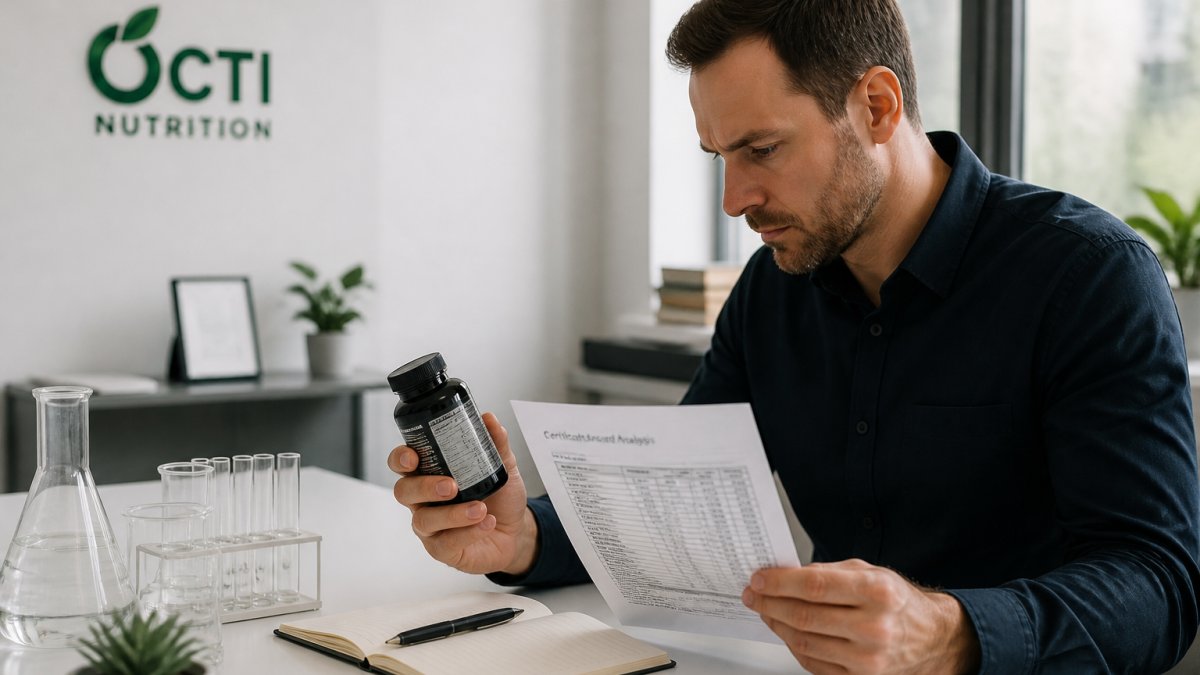
When a supplement goes through third-party testing, the lab measures active ingredient concentration, checks for microbial contamination, screens for heavy metals, and tests for banned substances. This isn't theoretical, it's a straightforward chemical analysis. A quality lab will provide a Certificate of Analysis (CoA) that shows exactly what they found.
The difference between a tested and untested supplement can be stark. Some untested products contain significantly less of the active ingredient than claimed. Others harbour contaminants that never appear on the label. The testing process catches these discrepancies before they reach you.
At Octi Nutrition, every batch undergoes independent laboratory testing. We publish Certificates of Analysis on request because we believe you should see the actual results, not just our word that testing happened.
Third-Party Tested Supplements: Why Independent Verification Matters
Third-party testing means a laboratory with no financial stake in your product's success does the analysis. This independence matters because it removes the conflict of interest. A brand-owned lab has incentive to produce favourable results. An independent lab has incentive to be accurate.
The distinction between third-party tested and manufacturer-tested is critical. Manufacturer testing is better than no testing, but it carries inherent bias. Independent labs operate to recognised standards and typically hold accreditations that verify their competence. They're audited by regulatory bodies and must maintain quality control protocols.
When you see "lab tested" on a supplement bottle without the word "third-party," dig deeper. Ask for the CoA. Ask who conducted the testing. If the brand resists providing these details, that's a signal. Transparency around testing is a baseline expectation for quality supplements.
The cost of third-party testing is genuine, it adds expense to production. Brands that absorb this cost are making a choice to prioritise your confidence over their margins. That choice reflects their overall approach to quality.
Supplement Purity and Potency: What the Numbers Tell You
Purity refers to the absence of unwanted substances. Potency refers to the concentration of the active ingredient. A supplement can be pure but weak, or it can contain the right dose but harbour contaminants. Testing measures both.
The potency number on a CoA tells you whether the manufacturer's label claim is accurate. If a sleep supplement claims 10mg of melatonin per capsule and the lab finds 7mg, you're getting 30% less than advertised. If the lab finds 12mg, you're getting more, which raises questions about quality control consistency.
Purity testing screens for heavy metals (lead, cadmium, mercury), pesticide residues, and microbial contamination (bacteria, moulds, fungi). These contaminants don't always produce immediate symptoms. Heavy metal accumulation happens slowly. Microbial contamination might not affect you on day one, but repeated exposure increases risk.
The numbers on a CoA are technical, but they're not mysterious. Potency is expressed as a percentage of the claimed dose. Purity is expressed as either "pass/fail" for contaminants or as a quantified amount (e.g., "lead: <0.1 ppm"). If a lab report looks vague or lacks specific numbers, that's a red flag.
Supplement Testing for Contaminants: The Hidden Risk You're Avoiding
Contaminants in supplements fall into several categories. Heavy metals accumulate in soil and water, and plants absorb them. Microbial contaminants come from poor manufacturing hygiene or contaminated raw materials. Pesticide residues persist from agricultural practices. Banned substances appear in some supplements either by accident (cross-contamination during manufacturing) or by design (added illegally to boost perceived efficacy).
The risk from a single contaminated capsule might be negligible. The risk compounds with repeated exposure over months or years. Someone taking an untested supplement daily for a year absorbs a cumulative dose of whatever contaminants are present.
Testing for contaminants is not optional if you're serious about supplement quality. A GMP-certified facility (Good Manufacturing Practice) reduces contamination risk during production, but raw material testing is equally important. The best supplements start with tested raw materials and end with tested finished products.
Many busy professionals skip this consideration because it feels abstract. Heavy metals don't taste bad. Bacterial contamination doesn't announce itself. The damage accumulates silently. Testing brings this risk into the light and quantifies it.
How to Choose Quality Supplements: A Practical Framework
Start by asking three questions: Has this product been independently tested? Are the test results publicly available? Is the brand transparent about what they found?
If the answer to any of these is no, move on. Transparency is non-negotiable. A brand that hides test results is either avoiding bad news or hasn't tested at all.
Next, check the dosage. Compare the amount of active ingredient per serving to the research literature. Many supplements contain sub-therapeutic doses, amounts too small to produce the effect you're seeking. A label might claim "supports sleep" while delivering a dose that research shows is ineffective.
Look for GMP certification on the label or the brand's website. GMP indicates that the facility follows strict manufacturing standards. It's not a guarantee of quality, but it's a baseline. Facilities without GMP certification operate under fewer constraints.
Finally, assess whether the brand uses evidence-led formulations. This means the ingredient selection and dosages are based on peer-reviewed research, not marketing claims. A brand that can point to specific studies supporting their formula is more credible than one that relies on vague wellness language.
| Selection Criterion | What to Look For | Why It Matters |
|---|---|---|
| Third-party testing | Certificate of Analysis available on request | Removes bias and verifies accuracy |
| Dosage alignment | Matches therapeutic doses in research | Ensures the product can actually work |
| GMP certification | Visible on label or website | Confirms manufacturing standards |
| Evidence-led formulation | Specific studies cited, not vague claims | Indicates scientific rigour |
| Transparency | Brand answers questions directly | Signals confidence and integrity |
The Cost-Benefit Reality of Lab Tested Supplements
Lab-tested supplements cost more because testing adds real expense. A third-party analysis of a finished product might cost £50 to £150 per batch, depending on the scope. Brands that test every batch absorb this cost or pass it to consumers.
The question isn't whether you can afford lab testing, it's whether you can afford not to. An untested supplement that doesn't work has cost you money and time. An untested supplement that harms you has cost far more.
For busy professionals, the return on investment is straightforward. You're taking supplements to improve sleep, focus, energy, or immunity. If the supplement doesn't contain what the label claims, you're wasting both money and the discipline required to maintain a routine. If it contains contaminants, you're trading short-term convenience for long-term risk.
Lab-tested supplements also tend to come from brands that care about quality across the board. A company willing to test independently is usually willing to source better raw materials, maintain cleaner facilities, and employ more rigorous quality control. These practices correlate. You're not just buying a tested product, you're buying into a brand's overall commitment to integrity.
Lab-tested supplements matter. When you choose a product backed by transparent testing, you're choosing confidence over hope. You know what you're taking, and you know it's what the label claims. For professionals managing demanding schedules and competing health priorities, that certainty is worth the investment. At Octi Nutrition, we test every batch independently and provide Certificates of Analysis on request because we believe your health decisions deserve evidence, not marketing. Build My Stack →
Frequently Asked Questions
What does third-party testing actually check in supplements?
Third-party testing verifies that a supplement contains the ingredients listed on the label in the stated amounts (potency), checks for harmful contaminants like heavy metals and bacteria, and confirms the product hasn't degraded. Independent labs use standardised methods to measure active compounds and screen for adulterants. This is distinct from manufacturer testing because a third party has no financial incentive to overlook problems.
Are lab tested supplements worth the extra cost for busy professionals?
For professionals taking supplements to address specific performance gaps, sleep, energy, focus, gut health, lab testing removes the risk of wasting money on products that don't contain what they claim. If you're investing time in a routine, paying slightly more for verified purity and potency ensures the supplement actually delivers the benefit you're after. The cost difference is typically modest compared to the value of genuine results.
How can I verify a supplement has been independently tested?
Request the Certificate of Analysis (CoA) from the manufacturer. A genuine CoA shows the testing lab's name, the date of testing, the specific compounds measured, and results. Reputable brands display CoAs on request or their website. Cross-check the lab name to confirm it's accredited by a recognised body. Be sceptical of vague claims like 'tested' without a specific lab name or accessible proof.
Does lab testing prove a supplement will actually work for me?
Testing confirms the product contains what it claims and is free from contaminants, but it doesn't guarantee efficacy for your individual situation. Lab testing ensures you're getting a quality product; whether it improves your sleep, focus, or gut health depends on the formulation's clinical evidence, your personal health status, and consistency. Always check that the supplement's ingredients have peer-reviewed research supporting their use for your specific need.