


7 Ways to Improve Gut Health Naturally for Busy Professionals
Table of Contents
- Signs of Poor Gut Health: What Your Body Is Telling You
- 1. Build Your Meals Around Foods for Gut Health
- 2. Fix Your Sleep to Improve Gut Health Naturally
- 3. Manage Stress Before It Manages Your Microbiome
- 4. Choose Gut Health Supplements for Professionals
- 5. Move Daily to Improve Gut Health Naturally
- 6. Cut Back on Alcohol and Ultra-Processed Food
- 7. Stay Hydrated and Time Your Meals Consistently
- Frequently Asked Questions
Last Updated: September 23, 2026
Signs of Poor Gut Health: What Your Body Is Telling You
Most people who come to this topic are not looking for a diagnosis. They are looking for an explanation. Bloating after meals, energy that collapses by mid-afternoon, skin that flares for no clear reason, sleep that never quite restores you: these are the everyday signals that something in the digestive system is not pulling its weight. This guide from Octi Nutrition sets out 7 ways to improve gut health naturally, built for people whose calendars leave little room for complicated protocols. Below, we will show you exactly which changes matter most, why they work, and how to fit them around a working week.
Gut health is the functioning of your digestive tract and the trillions of bacteria living inside it, which together influence digestion, immunity, energy and mood. When that system is under strain, the effects rarely stay in your stomach.
The signs worth paying attention to include:
- Persistent bloating or wind, especially within an hour of eating
- Irregular bowel habits, whether constipation, loose stools, or alternating between the two
- Fatigue that sleep does not fix
- Low mood, irritability, or difficulty concentrating
- Frequent colds or slow recovery from illness
- Skin flare-ups such as acne or eczema
None of these proves a gut problem on its own. Taken together, though, they form a pattern worth acting on. The seven methods below cover food, sleep, stress, supplements, movement, alcohol and hydration, in roughly the order that produces the fastest noticeable change.
1. Build Your Meals Around Foods for Gut Health
Food is the single biggest lever you have, and it works faster than anything else on this list. Two categories do most of the heavy lifting: fermented foods and fibre.
Fermented foods such as live yogurt, kefir, sauerkraut, kimchi and tempeh deliver live cultures directly into the digestive tract. Fibre feeds the bacteria already there. One without the other is a half-measure.
Fibre comes in two useful forms. Soluble fibre, found in oats, beans, lentils, apples and carrots, ferments in the gut and feeds beneficial bacteria. Insoluble fibre, found in wholegrains, nuts and the skins of vegetables, adds bulk and keeps things moving.
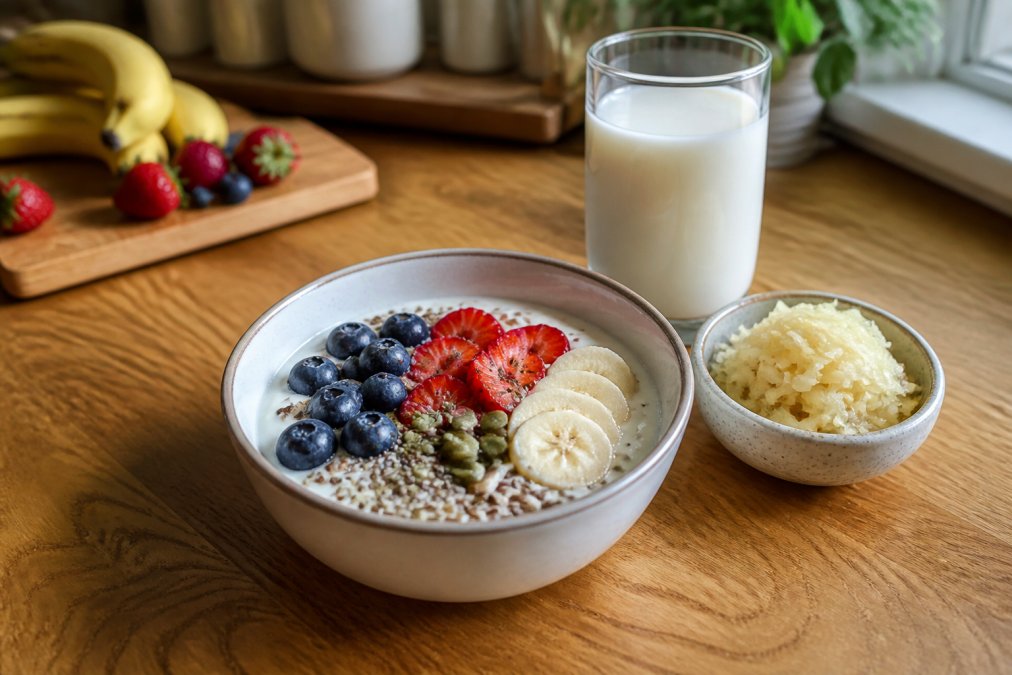
Fermented Foods and Fibre: The Two Pillars
A practical starting point is one fermented serving and two fibre-rich meals a day. That might be live yogurt with breakfast, a lentil soup at lunch, and a handful of nuts as an afternoon snack.
Increase fibre gradually. Jumping from a low-fibre diet to a high one in a single week is one of the most common mistakes, and it produces exactly the bloating people are trying to fix.
2. Fix Your Sleep to Improve Gut Health Naturally
Sleep and digestion run on the same clock, and disrupting one disrupts the other. Shift workers and people who regularly sleep fewer than six hours tend to report more digestive complaints, and the relationship runs in both directions: poor sleep worsens gut symptoms, and gut symptoms fragment sleep.
What actually helps:
- A consistent wake time, even at weekends, which anchors your body clock more effectively than a consistent bedtime
- No caffeine after early afternoon, since it lingers for hours
- A dark, cool room, and no screens for the last thirty minutes before bed
- A light evening meal, finished at least two hours before you lie down
3. Manage Stress Before It Manages Your Microbiome
Chronic stress changes the environment your gut bacteria live in. It alters blood flow to the digestive tract, slows or speeds transit depending on the person, and shifts the composition of the microbiome over time. This is why so many people find their digestion falls apart during a heavy quarter at work and recovers on holiday.
Three approaches that fit a working day:
- Physiological sighing. Two short inhales through the nose, one long exhale through the mouth. Repeat five times. It is fast, invisible in a meeting, and it works within a minute.
- A hard stop on email. Pick a time in the evening and stop checking. Late-night work messages keep your nervous system switched on long after the laptop closes.
- Ten minutes outdoors at lunch. Daylight and movement together do more for stress regulation than either alone.
4. Choose Gut Health Supplements for Professionals
Supplements are the most oversold and least understood item on this list. Gut health supplements for professionals should do one of two things: add live cultures, or feed the ones you already have. Anything else is marketing. True physiological resilience depends far more on consistent daily habits for gut health than on the transient effects of a pill.
What to Look For in a Professional-Grade Supplement
Four checks separate a serious product from a decorative one:
- Strain count and CFU. A credible probiotic states both, per serving, on the label.
- A prebiotic. Live cultures without something to feed on are a short-lived proposition.
- Full disclosure. Every amount printed. No proprietary blends hiding small doses behind a trademarked name.
- Independent testing. Batch-level certificates of analysis, available on request.
| Product | Format | Key Ingredients | Price | Best For |
|---|---|---|---|---|
| Pre + Pro 15 | Powder | 15 strains, 15 billion CFU, FOS fibre, B vitamins | £14.50 | Daily maintenance |
| Black Walnut & Pumpkin Seed Intestinal Cleanse | Capsule | Black walnut hull, pumpkin seed | £19.50 | A defined cleanse period |
| Gut Reset Stack | Stack | Both of the above | £30.50 | Cleanse then rebuild |
| Gut & Energy Stack | Stack | Pre + Pro 15 with electrolytes | £24.00 | Gut support plus daytime energy |
5. Move Daily to Improve Gut Health Naturally
Exercise changes the speed at which food moves through your digestive tract, and that transit time matters more than most people realise. Too slow and you get constipation and a build-up of waste. Too fast and you get loose stools and poor absorption. Regular movement keeps it in the middle.
6. Cut Back on Alcohol and Ultra-Processed Food
Both of these damage the gut lining and disturb the microbiome, and both are woven into professional life in ways that make them hard to avoid. Client dinners, airport food, the biscuit tin at 4pm.
A workable rule rather than a strict diet:
- No alcohol on nights before an early start
- Two alcohol-free days a week, minimum
- One home-cooked meal a day, even if it is simple
- Read the label on anything with more than five ingredients
7. Stay Hydrated and Time Your Meals Consistently
Hydration and meal timing are the two changes people skip because they sound too simple to matter. Both matter more than most supplements.
What helps:
- Eat within roughly the same one-hour window each day for each meal
- Finish your last meal two to three hours before bed
- Drink water steadily through the day rather than in two large bursts
- Keep a glass of water on your desk and refill it at set points
Frequently Asked Questions
What are the signs of poor gut health?
Common signs include persistent bloating, wind, constipation or diarrhoea, and frequent indigestion. Less obvious signals are fatigue that doesn't lift after sleep, brain fog, low mood, and getting ill more often than you'd expect. If you notice several of these together, your gut is worth attention. A food and symptom diary kept for two weeks can help you spot patterns before you change anything.
How long does it take to improve gut health naturally?
Most people notice some change within two to four weeks of consistent adjustments, but meaningful shifts in your microbiome take longer. Give any change, whether it's diet, sleep, or a supplement, a full thirty days before you judge it. Supplements like Pre + Pro 15 are designed for daily use, and the research on probiotics generally looks at four to eight weeks of continuous intake.
Which foods are best for gut microbiome diversity?
Aim for variety rather than a single hero food. Fermented options like kefir, live yogurt, and sauerkraut add live cultures. Fibre-rich plants feed them: oats, lentils, chickpeas, leeks, onions, garlic, and bananas are all strong choices. Research consistently links a wider range of plant foods eaten each week to a more diverse microbiome, so rotate what's on your plate rather than eating the same five vegetables.
Can stress affect your gut health?
Yes, and the effect runs both ways. The gut and brain communicate through the vagus nerve and chemical signals, so prolonged stress can change gut motility, increase sensitivity, and shift the balance of bacteria. For professionals dealing with chronic deadlines, this is often the missing piece. Even ten minutes of daily breathing exercises or a proper lunch break away from your desk can reduce the load.
Are gut health supplements for professionals necessary?
Not strictly necessary, but they close gaps that diet alone often misses during busy periods. A product like Pre + Pro 15 delivers 15 strains at 15 billion CFU with FOS prebiotic fibre and B vitamins, which supports energy metabolism and normal immune function. If you travel frequently, eat irregularly, or have taken antibiotics recently, a daily supplement gives you a consistent baseline that food alone may not.